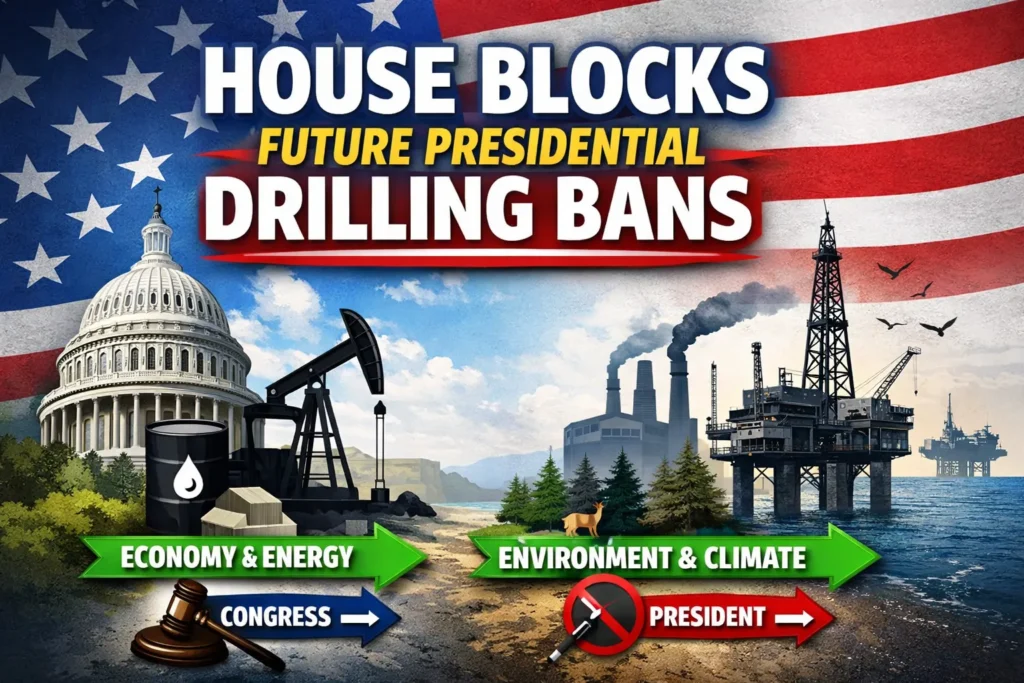
house blocks future presidential drilling bans has become a major topic in American politics and energy policy, sparking debate across environmental, economic, and political circles. This development signals a shift in how future administrations may handle oil and gas drilling regulations, and it raises important questions about the balance between environmental protection and energy independence.
In recent years, the United States has experienced intense policy discussions regarding fossil fuel production, climate goals, and economic stability. The decision tied to house blocks future presidential drilling bans reflects broader tensions between legislative authority and executive power, especially when it comes to natural resource management and environmental strategy.
What house blocks future presidential drilling bans Means and Why It Matters
house blocks future presidential drilling bans refers to a legislative move by the U.S. House of Representatives aimed at limiting the ability of future presidents to impose broad bans on oil and gas drilling. This action is designed to ensure that energy production policies remain stable and are not easily reversed by executive decisions alone.
The move highlights the importance of domestic energy production for the U.S. economy. Oil and gas drilling contributes significantly to employment, infrastructure development, and energy supply stability. Supporters argue that restricting presidential authority in this area protects long-term investments and ensures consistent policy direction.
At the same time, the decision has drawn attention from environmental groups who believe that limiting presidential power may weaken the government’s ability to respond quickly to climate concerns. The debate surrounding house blocks future presidential drilling bans shows how energy policy is closely tied to both economic priorities and environmental responsibilities.
Also read: state farm renters insurance: complete guide for renters in the USA
Political Background Behind the Decision
The political roots of house blocks future presidential drilling bans lie in long-standing disagreements between lawmakers over environmental regulation and economic growth. Some policymakers believe that executive actions have created uncertainty for the energy industry, while others argue that strong presidential authority is necessary to address urgent environmental issues.
Over the past decade, U.S. administrations have taken different approaches to drilling. Some focused on expanding domestic production to achieve energy independence, while others placed restrictions to reduce carbon emissions and protect natural ecosystems. The legislation connected to house blocks future presidential drilling bans reflects an attempt by lawmakers to shift more control from the executive branch to Congress.
This move also aligns with broader debates about separation of powers. By restricting unilateral executive bans, the House aims to ensure that major energy decisions involve legislative approval and public accountability.
Impact on the U.S. Energy Sector
The decision related to house blocks future presidential drilling bans could significantly influence the American energy sector. Oil and gas companies often rely on long-term planning and investment, and sudden policy changes can disrupt operations and financial strategies.
By reducing the likelihood of abrupt presidential bans, lawmakers aim to create a more predictable environment for energy producers. This could encourage investment in exploration, infrastructure, and job creation across multiple states that depend on fossil fuel industries.
However, critics argue that such stability might slow the transition to renewable energy sources. If drilling remains protected through legislative measures, the urgency to invest in alternative energy solutions may decrease. This concern highlights the complex balance between economic stability and environmental progress.
Also read: Selling Your Home This Winter? Here’s What You Need to Know Before Making a Move
Environmental Concerns and Climate Debate
One of the most significant aspects of house blocks future presidential drilling bans is its environmental impact. Environmental organizations have expressed concerns that limiting presidential authority could weaken efforts to address climate change.
Oil and gas drilling contributes to greenhouse gas emissions, habitat disruption, and long-term ecological risks. Presidential bans in the past were often used as tools to quickly protect sensitive regions such as coastal areas, wildlife reserves, and federal lands.
If future presidents face restrictions in imposing such bans, environmental protection strategies may rely more heavily on legislative approval, which can take longer and involve political negotiations. This shift could affect how quickly the U.S. responds to climate emergencies and environmental threats.
At the same time, supporters of the measure argue that technological improvements and regulatory frameworks can ensure responsible drilling without broad bans. They believe innovation can reduce environmental harm while maintaining energy production.
Economic Implications of house blocks future presidential drilling bans
The economic dimension of house blocks future presidential drilling bans is central to the discussion. The oil and gas industry plays a major role in the U.S. economy, contributing billions of dollars in revenue and supporting millions of jobs.
States that depend heavily on drilling activities, such as Texas, North Dakota, and Alaska, often experience significant economic growth through energy production. Limiting presidential authority over drilling bans could help protect these economic benefits.
Stable drilling policies may also influence fuel prices. Increased domestic production can reduce reliance on imports and help stabilize energy costs for consumers. This factor becomes especially important during periods of global energy market instability.
However, critics argue that overreliance on fossil fuels may create long-term economic risks. As the global economy shifts toward clean energy, countries that continue investing heavily in traditional energy sources may face future challenges.
Legal and Constitutional Dimensions
The issue of house blocks future presidential drilling bans also raises important legal questions. The U.S. Constitution divides powers between Congress and the President, and energy policy often sits at the intersection of legislative authority and executive action.
Presidents have historically used executive orders to influence drilling policies on federal lands and offshore areas. By introducing legislation to limit such authority, the House is emphasizing the role of Congress in shaping national energy strategies.
Legal experts believe this move could lead to future court challenges. Questions may arise about the extent of executive power, the authority of federal agencies, and the balance between environmental protection and economic policy.
The legal interpretation of house blocks future presidential drilling bans will likely shape future policymaking and set precedents for how energy decisions are made in the United States.
Reactions from Industry and Environmental Groups
The response to house blocks future presidential drilling bans has been divided. Energy companies and industry associations have largely welcomed the move, seeing it as a step toward policy stability and long-term planning.
They argue that consistent regulations allow companies to invest confidently in exploration, technology, and infrastructure. The industry believes this decision supports economic growth and strengthens national energy independence.
On the other hand, environmental groups have expressed strong opposition. They fear that restricting presidential authority may weaken environmental safeguards and delay climate action. Activists argue that strong executive powers are necessary to respond quickly to environmental threats.
This contrast in reactions reflects the broader debate about how countries should balance economic development with environmental responsibility.
Global Implications of the Decision
The impact of house blocks future presidential drilling bans is not limited to the United States. Global energy markets are closely connected, and changes in American drilling policies can influence oil prices, supply chains, and international relations.
If domestic drilling increases due to reduced restrictions, global oil supply could expand, potentially lowering prices. This may affect oil-exporting countries and reshape geopolitical dynamics.
Additionally, the decision may influence global climate negotiations. The United States plays a key role in international climate agreements, and its domestic policies often shape global expectations. If drilling remains a priority, it could impact how other nations approach their own energy strategies.
The Future of Energy Policy in the United States
house blocks future presidential drilling bans represents a turning point in how energy policy may evolve in the coming years. It highlights a shift toward legislative involvement and reduced reliance on executive actions for major decisions.
The future of U.S. energy policy will likely depend on several factors, including technological innovation, environmental priorities, economic needs, and political leadership. Renewable energy development will continue to grow, but fossil fuels may remain part of the national energy mix for the foreseeable future.
Balancing energy security with climate commitments will remain a major challenge. Policymakers will need to ensure that economic growth does not come at the cost of environmental sustainability.
Challenges and Opportunities Ahead
The debate around house blocks future presidential drilling bans presents both challenges and opportunities. On one hand, stable policies can support investment and job creation. On the other, they may slow environmental progress if not balanced carefully.
Opportunities exist in developing cleaner drilling technologies, improving regulatory oversight, and investing in renewable energy alongside traditional sources. This approach could help bridge the gap between economic and environmental priorities.
Collaboration between lawmakers, industry leaders, environmental organizations, and the public will be essential in shaping future energy strategies.
Conclusion
house blocks future presidential drilling bans is a significant development in U.S. energy policy that reflects deeper political, economic, and environmental debates. It signals a shift toward legislative control and raises important questions about the role of presidential authority in managing natural resources.
The decision has the potential to influence domestic energy production, global markets, environmental strategies, and constitutional interpretations. As discussions continue, the focus will remain on finding a balance between energy independence, economic growth, and environmental responsibility.
The future impact of house blocks future presidential drilling bans will depend on how policymakers, industries, and communities adapt to changing priorities. What remains clear is that energy policy will continue to shape the direction of the U.S. economy, environment, and global leadership for years to come.