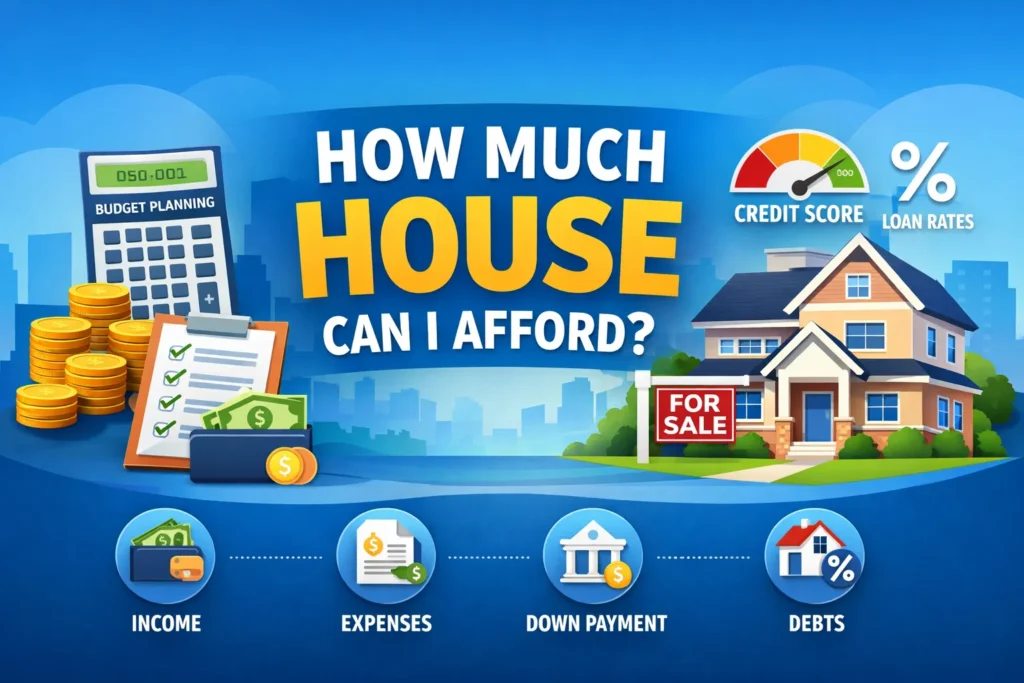
how much house can i afford is one of the most important questions people ask before planning to buy a home. Purchasing a house is not just an emotional decision, it is also a major financial commitment that can affect your lifestyle, savings, and future goals. If you understand your affordability clearly, you can make a confident and stress-free decision without putting pressure on your finances. This guide explains in detail how to determine how much house you can afford and what factors influence your buying capacity.
Understanding the meaning of how much house can i afford
The question how much house can i afford simply means evaluating the price range of a home that fits comfortably within your income, savings, and monthly financial obligations. It is not only about how much a bank is willing to lend you, but also about how much you can repay without affecting your daily life.
Many people make the mistake of stretching their budget to buy a bigger house. While this may seem attractive at first, it can lead to financial stress, reduced savings, and difficulty managing other expenses. A realistic affordability calculation ensures long-term financial stability.
Factors that determine how much house can i afford
Several financial elements decide your home-buying capacity. Understanding these factors helps you calculate your affordability accurately.
Income and financial stability
Your monthly and annual income play a major role in deciding how much house can i afford. A stable income gives lenders confidence and allows you to manage loan repayments comfortably. People with consistent earnings can qualify for higher home loan amounts.
If your income fluctuates, it is important to consider an average earning amount rather than assuming peak income levels.
Monthly expenses
To determine how much house can i afford, you must calculate your regular expenses. These include rent, groceries, transportation, insurance, school fees, utility bills, and lifestyle spending.
If a large portion of your income is already committed to expenses, your housing budget should be limited accordingly.
Existing debts
Loans such as car loans, personal loans, credit card balances, and education loans affect affordability. The more debt you have, the lower your home loan eligibility will be.
Lenders usually evaluate your debt-to-income ratio before approving a loan. A lower ratio increases your chances of affordability and approval.
Savings and down payment
The size of your savings determines how much down payment you can make. A higher down payment reduces the loan amount and monthly EMI, making your home more affordable.
People who save consistently over time are better prepared when calculating how much house can i afford.
Also read: state farm renters insurance: complete guide for renters in the USA
Credit score
A good credit score improves your loan eligibility and helps you get better interest rates. Lower interest rates reduce monthly payments and increase your affordability range.
Maintaining a healthy credit profile is essential for anyone planning to buy a house.
The 28/36 rule in home affordability
Financial experts often use the 28/36 rule to calculate how much house can i afford. According to this rule:
28 percent of your monthly income should be the maximum you spend on housing expenses including EMI, property tax, and insurance.
36 percent of your income should be the maximum total debt obligation including housing EMI and other loan payments.
Following this rule helps you maintain financial balance and prevents over-borrowing.
How to calculate how much house can i afford step by step
Understanding affordability becomes easier when you follow a structured approach.
Step 1: Calculate monthly income
Start by calculating your net monthly income after taxes. Include all consistent sources of earnings.
Step 2: Track monthly spending
Write down all your monthly expenses. This gives you a clear picture of how much money is available for home loan payments.
Step 3: Check existing loan commitments
Identify how much you already pay toward EMIs. This affects your borrowing capacity.
Step 4: Estimate EMI affordability
Ideally, your EMI should not exceed 25 to 30 percent of your monthly income. This keeps your finances stable.
Step 5: Determine loan eligibility
Based on your EMI capacity, lenders calculate the total loan amount you qualify for. This directly answers how much house can i afford.
Step 6: Add down payment
Combine your eligible loan amount with your savings for down payment to determine the total home budget.
Role of home loan interest rates
Interest rates play a significant role in deciding how much house can i afford. Even a small difference in interest rates can change your EMI amount.
Lower interest rates increase your borrowing capacity, while higher rates reduce affordability. Therefore, comparing lenders and choosing the best rate is important before finalizing your loan.
Importance of down payment in affordability
Down payment directly affects how much house can i afford. A larger upfront payment reduces your loan burden and monthly installments.
Benefits of higher down payment include lower EMI, reduced interest burden, improved loan approval chances, and long-term financial comfort.
Buyers who depend entirely on loans may face higher repayment pressure over time.
Hidden costs of buying a home
While calculating how much house can i afford, many buyers focus only on property price and EMI. However, there are additional expenses that must be considered.
These include registration charges, stamp duty, legal fees, property tax, maintenance costs, insurance, interior work, and moving expenses.
Ignoring these costs can disturb your budget and increase financial pressure.
Lifestyle considerations while deciding affordability
Your lifestyle should not suffer after buying a home. When calculating how much house can i afford, think about future financial needs.
These may include children’s education, medical emergencies, travel plans, retirement savings, and investments.
A home should enhance your life, not limit your financial freedom.
Renting vs buying comparison
Some people struggle to decide whether buying a house is the right choice. Understanding how much house can i afford also depends on comparing renting and owning.
Renting offers flexibility and lower upfront costs, while buying provides long-term security and asset creation.
If EMI is close to your current rent and your income is stable, buying can be a smart decision.
Impact of location on affordability
Property prices vary based on location. Urban areas, city centers, and developed neighborhoods are usually more expensive than suburban areas.
Your answer to how much house can i afford may change depending on where you plan to buy. Expanding your search to nearby areas can help you find better options within budget.
Financial planning before buying a home
Proper planning is essential before making a home purchase. To understand how much house can i afford, you must prepare financially.
Build an emergency fund before committing to a loan. Save at least six months of expenses to handle unexpected situations.
Avoid taking new loans before applying for a home loan. This improves your eligibility and affordability.
Invest in insurance policies to secure your family’s financial future.
Common mistakes people make while deciding affordability
Many buyers make emotional decisions when purchasing a house. These mistakes can affect their financial health.
Some common mistakes include overestimating income, ignoring future expenses, choosing longer loan tenure without planning, underestimating maintenance costs, and depending entirely on loan approval.
Avoiding these mistakes ensures a realistic answer to how much house can i afford.
Benefits of knowing how much house can i afford in advance
Understanding affordability before searching for a home gives several advantages.
It helps you set a clear budget, reduces confusion during property selection, strengthens loan approval chances, prevents financial stress, and allows better negotiation with sellers.
Most importantly, it ensures that your home purchase supports your financial goals.
How loan tenure affects affordability
Loan tenure has a direct impact on how much house can i afford. Longer tenure reduces EMI but increases total interest paid. Shorter tenure increases EMI but reduces overall interest burden.
Choosing the right balance between EMI and tenure is important for long-term stability.
Role of financial discipline in home ownership
Owning a home requires consistent financial discipline. Timely EMI payments, controlled spending, and continued savings are necessary.
People who manage money responsibly can easily maintain their home expenses and answer how much house can i afford with confidence.
Future income growth and affordability
While calculating how much house can i afford, future income growth should be considered carefully. Promotions, business expansion, and skill upgrades can increase earnings.
However, it is safer to base decisions on current income rather than expected future income.
Emotional vs practical decision
Buying a home is emotional, but affordability is practical. A beautiful house may attract you, but it must fit your budget.
Understanding how much house can i afford ensures you balance emotions with financial logic.
Expert tips for first-time home buyers
First-time buyers should follow practical strategies before purchasing a home.
Start saving early for down payment. Improve credit score before applying for a loan. Compare multiple lenders for better interest rates. Choose a property within budget instead of stretching finances. Plan long-term financial goals before finalizing the purchase.
These steps help in answering how much house can i afford realistically.
Conclusion
how much house can i afford is not just a financial calculation, it is a decision that affects your lifestyle, savings, and future security. A home should provide comfort and stability, not financial stress.
By analyzing income, expenses, debts, savings, and long-term goals, you can determine a realistic home budget. Proper planning, disciplined financial behavior, and practical thinking make home ownership a rewarding experience.
When you clearly understand how much house can i afford, you move closer to buying a home that is not only affordable but also financially safe and sustainable for years to come.